 Fuel
Fuel 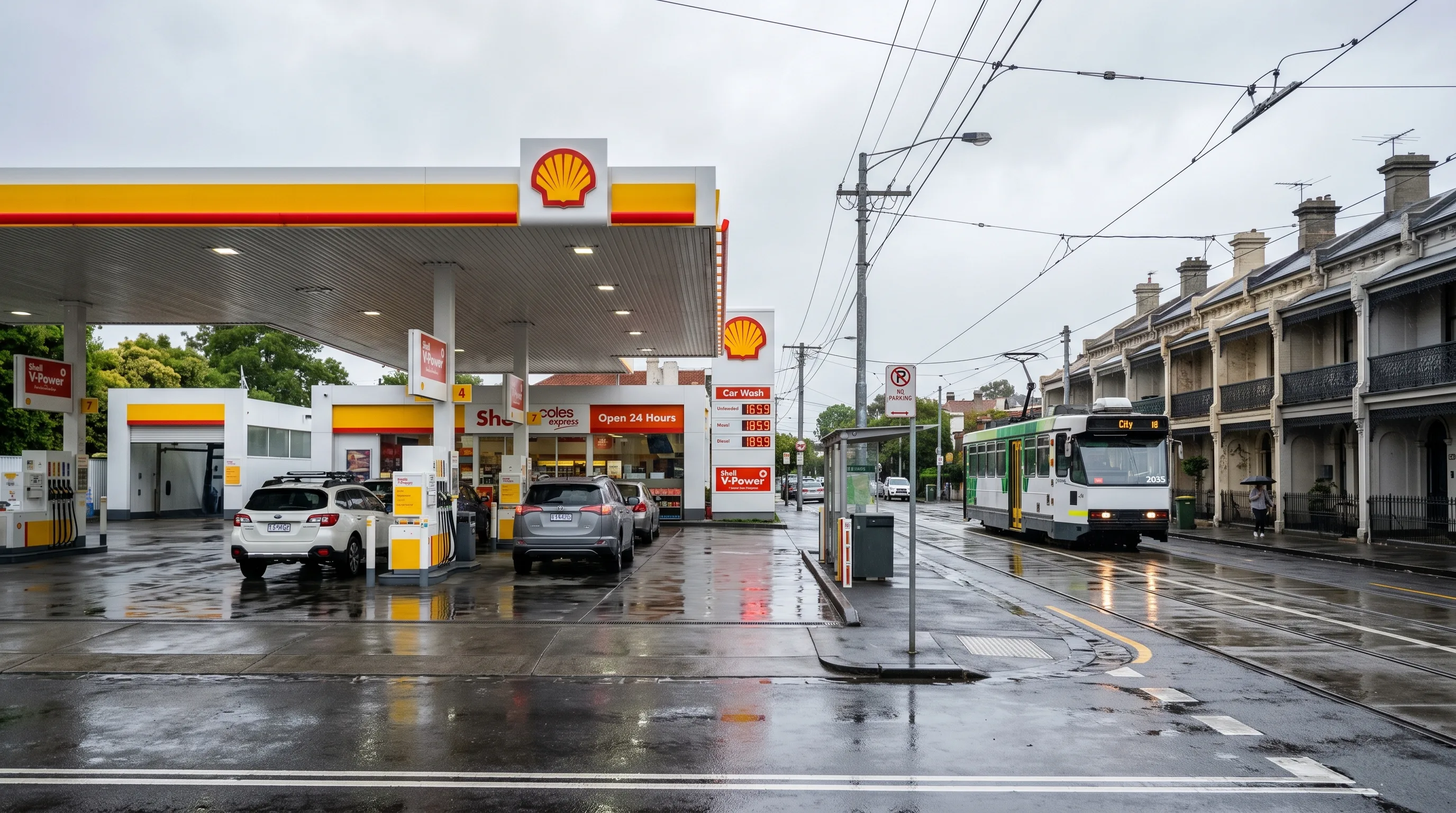
If you want the short answer: the cheapest petrol in Melbourne is usually found in the outer northern and western suburbs — think the growth corridors out past the ring road — while the inner east and the leafy bayside pockets tend to sit at the dear end. That geographic split holds most days, but Melbourne also runs a price cycle, so the same suburb can swing 30–50 c/L depending on where it is in that cycle. The only way to be certain on a given day is to check the live fuel map for Melbourne before you pull in.
Below is how the pattern works, why it works, and how to combine the geography with the timing so you're not paying the peak.
The broad geographic pattern
Melbourne is big, and fuel pricing tracks the shape of the city. As a rule of thumb, prices get cheaper the further out you go on the north and west sides, and more expensive as you move into the established inner-east and bayside suburbs.
- Cheapest end: the outer north (Craigmore, Epping, Craigieburn way) and the outer west (out towards Werribee, Tarneit, Melton). These corridors have lots of newer, high-volume stations competing hard for commuter traffic.
- Middle of the pack: the south-east growth belt and the outer ring generally — plenty of choice, decent competition, prices that move with the cycle.
- Dearest end: the inner east, inner south and bayside. Higher land costs, fewer big discounters, and drivers who are less price-sensitive all push the board prices up.
It's the same story we see in the cheapest fuel suburbs in Sydney and in Brisbane's cheapest suburbs — the outer, high-competition corridors win, the prestige inner pockets lose. You can browse every suburb on the Victoria locations directory, and the Melbourne live prices page shows what's moving across the metro right now.
Why it comes down to competition and density
The single biggest driver of a cheap board price is competition. Where you've got a cluster of independents, a big-box discounter, and a couple of major chains all within a few hundred metres, none of them can afford to sit high — the cheapest one steals the traffic and the rest follow.
That's why the outer growth corridors do so well. New estates get new service stations built to capture commuter and freight volume, and that density forces sharp pricing. The inner east, by contrast, has older sites on expensive land with captive local customers, so there's less pressure to discount.
Warehouse-club fuel is the most extreme version of this: a single low-margin operator can drag the average down across a whole pocket. If there's one near you it's almost always worth the detour — we cover how that works in the guide to Costco fuel in Australia.
Timing matters as much as location
Here's the catch with Melbourne: the suburb is only half the answer. Melbourne runs a fuel price cycle — prices creep down over a stretch of days (the trough), then jump sharply on a single "restoration" day back to the peak, and the slow grind down begins again. Buy on the wrong day and a cheap suburb can still sting you; buy a cheap suburb on a trough day and you're laughing.
The cycle isn't a neat weekly thing and it shifts around, so don't trust a "Tuesday is cheap" rule of thumb. Track where the cycle actually is using our live Melbourne fuel price trends, and read the full breakdown in our guide to the Melbourne fuel price cycle. The same logic, applied state by state, is covered in when's the best time to buy fuel.
A quick read on where to look
| Part of Melbourne | Typical price standing | Why |
|---|---|---|
| Outer north & west corridors | Usually cheapest | High station density, new high-volume sites, commuter competition |
| South-east growth belt & outer ring | Mid-range | Good choice, prices track the cycle |
| Inner east, inner south, bayside | Usually dearest | Expensive land, fewer discounters, less price-sensitive drivers |
| Freeway-exit and tourist-route sites | Often dear | Captive passing trade, little local competition |
Treat this as a starting point, not gospel. On any given day the live map can flip the script — a single discounter near your inner-east office might undercut a "cheap" outer suburb that's just hit its restoration day.
An honest note on Victoria's price data
One thing worth knowing before you rely on any Victorian fuel figure: VIC's prices come from the State Government's "Fair Fuel" open-data feed, and that feed updates roughly once a day rather than in real time. So a price you see for a Melbourne station can be up to a day old — close enough to spot the cheap suburbs and the dear ones, but not minute-to-minute live the way QLD and NSW prices are.
What that means in practice: use the data to find the right area and the right brands, then expect a small drift between the listed price and the board you see when you arrive. We label the freshness honestly on every station, so you always know how recent a number is. It doesn't change the geography — the cheap corridors stay cheap — it just means treating the exact cents figure as a strong guide rather than a guarantee.
Beyond the board price
The number on the sign isn't the whole cost. A few extra levers worth pulling:
- Loyalty and discount dockets. A 4–10 c/L docket or a fuel-app discount can beat a slightly cheaper station up the road. We compare them in the rundown of Australian fuel loyalty programs.
- Right fuel for your car. Paying for 98 when your engine is happy on 91 is money gone — see premium vs regular petrol.
- Don't chase a cheap price across town. Driving 15 km to save a couple of cents can cost more in fuel than you save. The Fuel Daddy trip and savings calculators tell you whether a detour is actually worth it.
The live map is the real answer
Geography gives you the odds; the live map gives you the answer for today. Open it, drop your location, sort by cheapest, and you'll see exactly which Melbourne stations are under the average right now — including the outer-corridor sites that are usually the value play.
Heading out of town? The same approach works statewide — Geelong's live fuel prices and every other regional centre are on the VIC locations hub. Wherever you fill up across Melbourne, the move is the same: know the pattern, watch the cycle, and let the live fuel map confirm the cheapest pump near you before you commit.