 Fuel
Fuel 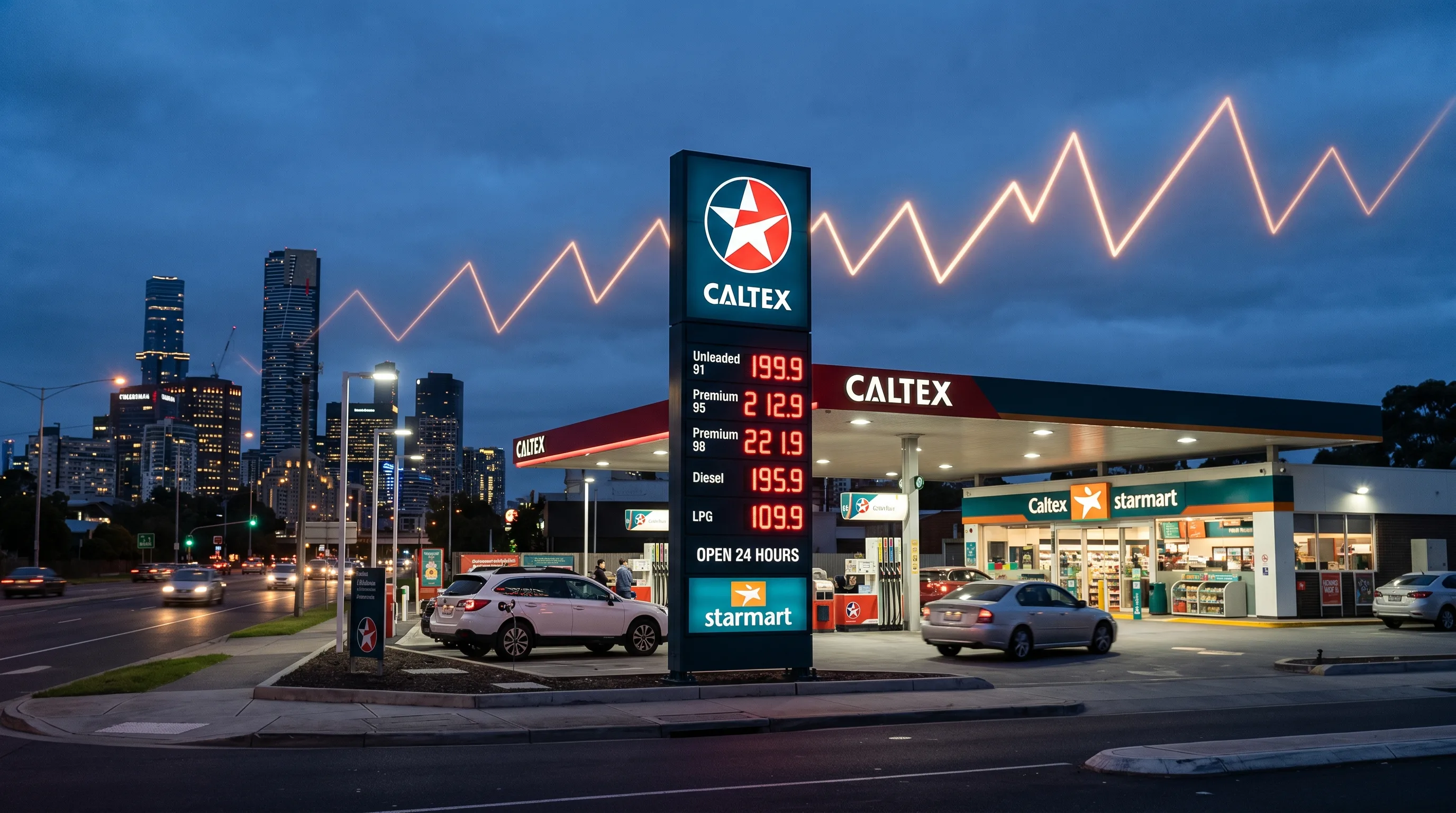
Melbourne runs a multi-week fuel price cycle, not a daily one. Prices jump sharply over a day or two, sit near a peak, then drift down a cent or two at a time over the following weeks until the next big hike resets the lot. In practice that means fuel is usually dearest around weekends and at the start of a fresh cycle, and cheapest mid-week, deep into the back half of the cycle - right before the next reset. If you want one rule: don't fill at a weekend peak unless you're running on fumes.
This guide breaks down how the Melbourne cycle actually behaves, how to time your fill around it, why it's retailer behaviour rather than crude-oil moves, and the tools that let you read it in real time. Because the cycle shifts, the most useful habit is checking live - you can do that free on the Fuel Daddy live map, no sign-up. To see which way Melbourne prices are actually heading, the 14-day live price trends show the shape of the current cycle at a glance.
How does the Melbourne fuel price cycle behave?
The cycle has two distinct phases, and they don't move at the same speed. The restoration is the violent bit: prices snap up 25–40 cents a litre across most major-chain stations within a day or two. There's no slow climb - it's a near-vertical step. Then comes the long discounting phase: stations shave a cent or two off per day, undercutting each other to win volume, and that grind can run for several weeks before margins get thin enough to trigger the next hike.
That asymmetry is the whole game. The expensive days are obvious and brief; the cheap days are quiet and stretch out. Melbourne's cycle is closer in rhythm to Brisbane's long cycle than to Sydney's twitchy weekly one - if you've read our guide on the Queensland 42-day fuel cycle, the same logic broadly applies, and it's the opposite end of the spectrum from the fast NSW fuel price cycle.
When is fuel cheapest in Melbourne?
Here's the honest answer, because anyone promising a guaranteed cheapest day is guessing. As a general pattern, Melbourne fuel is cheapest mid-week and late in the cycle - the days before retailers restore margins. Prices tend to firm up heading into the weekend and peak around Saturday and Sunday, when demand is highest and stations have the least reason to discount.
So the sweet spot is a mid-week fill - think Tuesday to Thursday - when the current cycle is already well into its downward drift. The worst time is a fresh restoration that lands on a Friday, locking in a high price right through the weekend.
- Cheapest: mid-week, deep into the back half of a cycle, just before the next hike.
- Dearest: the weekend, and the day or two right after a restoration spike.
- The trap: filling on a Saturday out of habit when the cycle has just reset.
But the cycle drifts - the trough doesn't land on a fixed calendar date. The pattern tells you roughly when to look; the live map tells you whether today is actually cheap. We unpack the same timing logic for any market in the best time to buy fuel.
How do I time my fill around it?
Timing a long cycle is easier than a weekly one, because you have room to plan. The trick is matching your tank to the cycle rather than to your fuel light.
If prices have just spiked and you're half-full, hold off - buy just enough to get by and wait for the discounting phase to bite. If you're sitting in the back half of the cycle with prices grinding low, that's your moment to fill right up, even brim it before a long drive. Don't run your tank dry mid-cycle and get forced into a peak-day fill. Planning a longer trip out of the city? Pair this with our road-trip fuel cost guide and the trip and savings calculators to work out whether to brim before you leave or top up on the road.
| Cycle stage | What you'll see | What to do |
|---|---|---|
| Restoration (spike) | Prices jump 25–40c overnight, lots of red on the map | Buy only what you need; wait it out |
| Early discounting | Prices easing a cent or two a day, wide spread between stations | Shop around hard for the early discounters |
| Late discounting (trough) | Prices clustered low, mostly green on the map | Fill right up - this is the bottom |
Why does the cycle happen at all?
This is the part that surprises people: the cycle has almost nothing to do with the oil price on any given day. It's a deliberate pricing pattern run by the big retailers, not a reflection of what crude did overnight. The chains hike in lockstep to restore margin, then compete the price back down to win volume off each other until it's not worth discounting further, then hike again. Wash, repeat.
The ACCC has tracked these cycles in Australia's capital cities for years and describes them as profit-driven, not cost-driven. Crude oil and the exchange rate set the broad floor over months; the weekly sawtooth you actually see at the pump is retailer behaviour. That's why a barrel of oil can be flat while Melbourne prices swing 30 cents in a fortnight - and it's the same mechanism that makes prices vary so much station to station, which we cover in how fuel prices are set and why fuel prices vary.
A note on Victoria's price data
One quirk worth knowing if you're in Victoria: the state government's official fuel-price feed is updated roughly daily, not minute-by-minute. Victoria's Fair Fuel scheme publishes prices once a day, so the numbers can lag a live board price by a little. That's different from NSW or Queensland, where data refreshes much more often.
The practical upshot: in Melbourne, treat the official data as a strong daily guide rather than a to-the-second quote, and confirm the board price when you pull in. Fuel Daddy folds Victoria into the same national map alongside every other state, so you can still spot the shape of the cycle and the cheap stations near you - just know that a fresh overnight restoration might show up a touch behind. The full Victorian directory lives at the Victoria locations hub.
How do I read the cycle on the live map?
This is where timing stops being guesswork. The Fuel Daddy live map colour-codes every station's current price, so you can see the shape of the cycle at a glance instead of trying to remember what day it is.
- A wave of red, prices jumping 25–40c? The restoration has hit. You've missed this trough - buy only what you need and wait.
- A wide spread between cheap and dear stations? Classic mid-cycle. The discounters are still undercutting, so shop around hard.
- Prices clustered low, lots of green? You're near the bottom of the cycle - fill right up before the next hike.
Glance at the map a couple of times across a fortnight and you'll start to recognise the rhythm: the long drift down, then the snap back up. The map does the watching so you don't have to memorise a date. The live Melbourne fuel prices page zeroes in on the metro, and you can pull up Geelong fuel prices if you're down the highway.
Where to find the cheapest stations near you
Timing the cycle is half the job; the other half is location. Even at the bottom of the cycle, the gap between the cheapest and dearest station in your suburb can be 20 cents or more, because not every operator discounts at the same pace. That's a separate saving from the cycle, and the two stack.
This guide is about when to fill; for where, see our companion piece on the cheapest fuel suburbs in Melbourne, which maps out the consistently cheaper pockets. Put the two together - fill mid-week, deep in the cycle, at a cheap suburb's cheapest station - and you'll quietly beat the people paying weekend peak. For the broader playbook, our guide on how to save money on fuel brings the timing, location and docket angles together.
The bottom line
Melbourne's fuel price cycle is long and slow - prices snap up 25–40 cents in a day or two, then grind down over weeks before the next reset. That makes fuel usually dearest on weekends and just after a spike, and cheapest mid-week, late in the cycle. It's retailer behaviour, not the oil price, so don't wait for "the news" to tell you when to fill - watch the cycle.
Because the cycle drifts, the reliable habit is checking live. Pull up the Fuel Daddy map a couple of times a fortnight, match your tank to the cycle, fill near the bottom, and pick a cheap station while you're at it. Browse your own area any time at the Victoria locations hub.